By Anna Katharina Finsler, Managing Director, Finsler Customs GmbH · Last updated:
Importing an electric car
Importing an electric car from Germany often pays off particularly well: there is no CO₂ penalty (0 g/km), and the choice in Germany is much wider. Two things to know: since 1 January 2024 electric cars also pay the 4 % vehicle tax, and the battery warranty (usually 8 years or 160,000 km) applies across Europe.
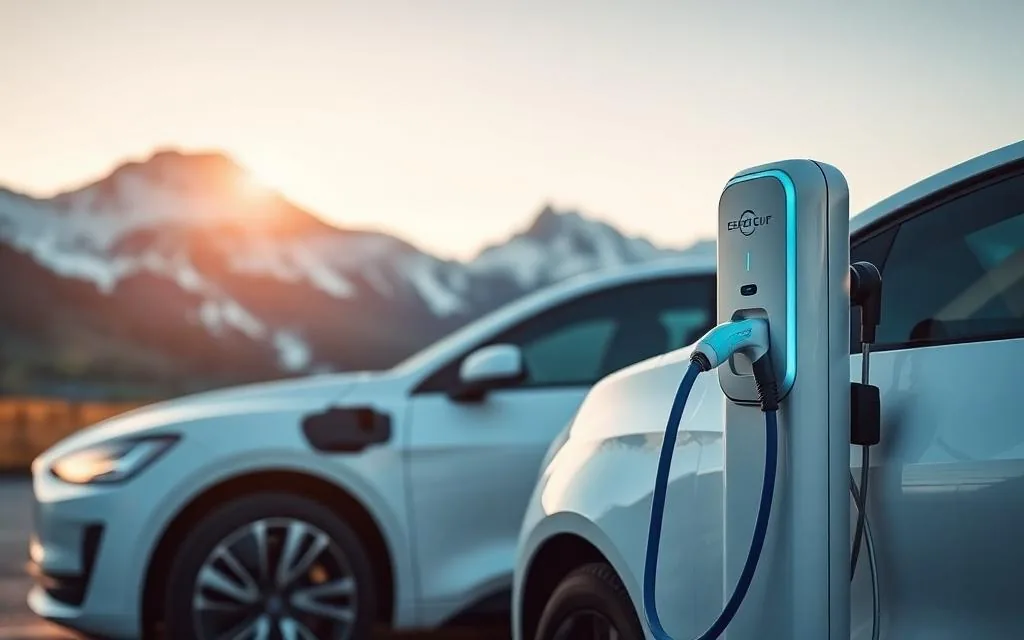
What changed in 2024
Until the end of 2023 electric vehicles were exempt from the vehicle tax. That exemption is gone. What remains is the absence of a CO₂ penalty — on a young combustion car that penalty alone can run into several thousand francs, so an electric import is still comparatively attractive.
What to check on the vehicle
- Battery condition. Ask for a current state-of-health report; on a used electric car it matters more than the mileage.
- Charging standard and cables. Type 2 is standard in Switzerland; make sure the right cable is included.
- Manufacturer's battery warranty. Usually eight years or 160,000 km, and usually Europe-wide — but check whether it names a territory.
Where to buy
Germany has the largest selection, Norway the largest used electric market in Europe. Note that in Norway there is normally no VAT to reclaim, which changes the arithmetic considerably — the country page on Norway explains why.
What falls away with an EV — and what does not
The CO₂ penalty falls away entirely. A pure battery-electric vehicle emits 0 g/km and therefore sits below any individual target. On young vehicles this is the single largest item there is: a combustion car at 160 g/km and 1,600 kg kerb weight quickly runs to several thousand francs, an EV of the same age to nothing.
The automobile tax does not fall away. This is the most widespread misconception. Art. 2 para. 1 of the Automobile Tax Act attaches to the customs tariff number, not to the drivetrain — an electric car is a passenger car of number 8703 like any other. The 4 % is due. Budgeting on “EVs are tax-free” leaves you around CHF 1,600 short on a CHF 40,000 vehicle.
Import VAT of 8.1 % applies unchanged as well. It is calculated on the vehicle value, all incidental costs up to the border and the automobile tax.
Until the end of 2023 electric vehicles were exempt from the automobile tax. That exemption lapsed on 1 January 2024. Guides still speaking of tax exemption are simply out of date — always check the date on any source you read.
The battery is where the purchase is decided
On a combustion car you judge condition by mileage and service book. On an electric car the most important figure is the remaining capacity of the traction battery — and you cannot see it from outside.
Ask for a current battery health report before buying. Most manufacturers can produce one from workshop diagnostics; independent testers offer it too. A car at 88 % remaining capacity and one at 95 % differ by tens of kilometres of everyday range — and on resale by considerably more than the report costs.
Also ask about the battery warranty and whether it survives a change of keeper and export to Switzerland. Most manufacturers guarantee eight years or 160,000 km to a minimum capacity, but the conditions differ and some warranties are expressly tied to the country of registration.
A third point easily missed: charging power and connector type. Type 2 and CCS are standard in Switzerland and fitted across Europe — no surprises there. Vehicles from Norway and Sweden are often specified from the factory for higher AC charging power, which in daily use is an advantage.
Norway: the biggest EV market — with one trap
Nowhere in Europe is the choice of young, well-specified electric cars as large as in Norway. That is exactly why Swiss buyers end up there — and exactly where most of them miscalculate.
No VAT comes back from Norway. Norway belongs to the EEA, but not to the EU and not to the EU customs territory. The decisive point for your calculation: used cars already registered in Norway are normally sold without Norwegian VAT. There is therefore none to reclaim.
The one-off levy contained in the price, the engangsavgift, is refunded by Skatteetaten only on application and reduced by the vehicle's age, for vehicles first registered in Norway on or after 26 June 2014 and less than ten years old. Anyone budgeting with a 25 % VAT refund — the Norwegian standard rate — is several thousand francs out on a CHF 40,000 car. Our calculator therefore applies 0 % for Norway, treats the asking price as a net price and leaves out any refund of the one-off levy.
Then there is the distance. Transport from Norway takes longer and costs considerably more than from Germany. Weigh both against the price advantage before you fall in love with a listing.
When importing an EV really pays
The case for importing is strongest when three things come together: a young vehicle (because that is where the CO₂ penalty hits a combustion car hardest and is simply zero on an EV), a sale with VAT shown on the invoice, and a country of origin with a high rate.
Conversely it pays least on an older electric car from a private sale: there is no VAT to reclaim, the CO₂ penalty would not have applied anyway, and what remains are automobile tax, import VAT and transport as additional costs.
Do not forget the cantonal side. Several cantons levy a reduced motor vehicle tax on electric vehicles, or none at all, sometimes for a limited period. That is not an import question but a residence question — yet it noticeably changes the overall arithmetic across the years you keep the car. The conditions change regularly; ask your cantonal road traffic office for the current position.
The specific final price for your vehicle comes out of the import calculator — with country of origin, first registration, kerb weight and transport from your own collection address. No sign-up and no email address.
Frequently asked questions
Are electric cars exempt from the vehicle tax when imported into Switzerland?
No. Since 1 January 2024 electric cars also pay the 4 % vehicle tax; the Federal Council lifted the earlier exemption. Many older sources still claim the opposite. As with any import, Swiss VAT of 8.1 % is added. There is no longer a weight-based duty: industrial tariffs were abolished on 1 January 2024, and the duty rate for passenger cars is CHF 0, regardless of the country of origin and without any proof of origin. The customs declaration remains compulsory.
Do I pay a CO₂ penalty when importing an electric car?
No, never. Electric cars have a CO₂ value of 0 g/km and are therefore always below the target of 93.6 g/km (WLTP, as of 2026). Even a brand-new electric car pays no CO₂ penalty, which is one reason why importing an electric vehicle pays off so often.
Does the manufacturer's battery warranty still apply after import into Switzerland?
As a rule, yes. The battery warranty, usually eight years or 160,000 km, is tied to the vehicle and applies across Europe; Swiss brand dealers handle warranty cases on imported electric cars in the normal way. Check the conditions before you buy all the same, because a few manufacturers tie the warranty to the country of registration. Also ask for a battery state-of-health (SoH) report; values above 90 % are normal for cars under five years old.
Why does importing an electric car from Germany pay off so often?
The German market is many times larger, and expiring leasing fleets push down used prices: on young used electric cars, price advantages of 15–25 % over Switzerland are common. On top of that the CO₂ penalty falls away entirely, and some cantons levy a reduced motor vehicle tax on electric cars, in some cases only for a limited period. That lowers the cost over the whole time you keep the car.
Sources and legal basis
The statements on this page rest on the following official publications. The wording of the enactments in force is always decisive.
- FOCBS – Importing vehicles into Switzerland
- FOCBS – Customs declaration and taxes on a vehicle import
- Automobile Tax Act (AStG, SR 641.51) (German text)
- Federal Act on Value Added Tax (VAT Act, SR 641.20)
Company
Services
- All services
- Vehicle import DE→CH
- Customs clearance
- Vehicle sourcing
- Document service
- Import advice
- Vehicle detailing
Calculators and tools
- Import calculator
- Swiss customs fees
- CO₂ calculator
- CO₂ penalty
- Transport calculator
- Car transport to CH
- Check the Stammnummer
- FlexiMoto.ch
Location
Import by country of origin
- Importing a car from Germany into Switzerland
- Importing a car from Austria into Switzerland
- Import a car from France into Switzerland
- Import a car from Italy to Switzerland
- Import a car from the Netherlands into Switzerland
- Import a car from Belgium to Switzerland
- Importing a car from Luxembourg into Switzerland
- Importing a car from Czechia into Switzerland
- Importing a car from Poland into Switzerland
- Import a car from Sweden into Switzerland
- Import a car from Norway to Switzerland
Import by vehicle type
- Importing a passenger car into Switzerland
- Importing a motorcycle into Switzerland
- Importing a van up to 3.5 t into Switzerland
- Importing a motorhome into Switzerland
- Importing a caravan into Switzerland